


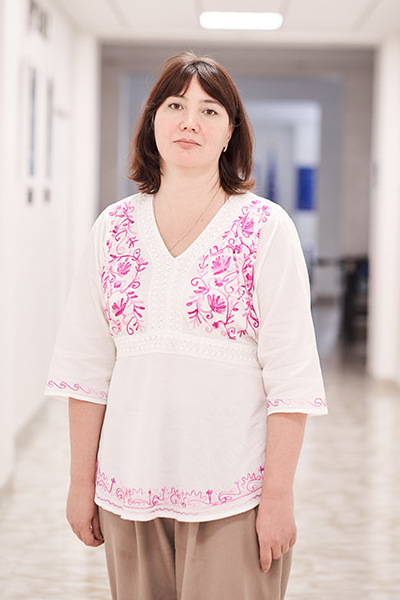
Vice-Rector for Scientific Work
Directs, organizes, controls, and is responsible for the activities of the Department of Research and its subdivisions:
- The Education Department;
- The Research Department.
Coordinates education and research activities in all structural units of the university.
Organizes:
- The preparation and holding of University Academic Council meetings;
- Market research on scientific problems to identify societal needs for scientific developments in the fields licensed by the university;
- The development of the university's research plan and monitors its implementation;
- The development of the Program for Fundamental and Applied Research Development and monitors its implementation;
- The development of a thematic plan for university research;
- The preparation of a plan to enhance the scientific qualifications of staff to strengthen the university's research potential;
- The development and implementation of a support system for students with special needs, including their social and physical rehabilitation;
- The preparation of documentation for the awarding of academic degrees and titles to academic staff;
- The preparation of reports on the university's scientific activities for the Ministry of Education and Science of Ukraine;
- The preparation of documents for the opening of postgraduate and doctoral programs;
- The preparation of documents for the establishment of specialized academic councils;
- The preparation of documents for granting journals the status of academic professional publications;
- The organization of scientific conferences, seminars, and competitions for the best scientific and methodological work, including inter-university and international events;
- The state registration of university scientific developments and inventions;
- The preparation of the university's scientific publications for printing;
- The study of the needs of students with disabilities for specialized adaptive learning tools.
Ensures:
- The involvement of faculty, students, and staff in creative processes and scientific research to improve the quality of professional training;
- The determination, considering department suggestions of the directions and topics for student research, coordinating their planning, providing methodological support, and monitoring their execution at all stages of comprehensive scientific work;
- The study, generalization, and dissemination of experience in organizing student scientific work within the framework of personal and professional development programs;
- The analysis of the effectiveness of ongoing research and measures to improve it;
- The high-quality training of highly qualified personnel through doctoral, postgraduate, and research programs;
- Participation, according to established quotas, of scientific-pedagogical staff, students, and department employees in university-wide educational, scientific, educational-methodological, sports, cultural, and other events, as outlined in the University's annual Work Regulations and other normative documents.
Carries out:
- General supervision of the Student Scientific Society, student academic and research-production units, and scientific clubs;
- The synthesis, implementation, and dissemination of pedagogical experience, including from other higher education institutions, through media and scientific schools;
- Coordination of the activities of specialized academic councils;
- Preparation of proposals for the recognition of faculty and staff for their scientific achievements, leadership in student research, and work with students with special needs;
- Preparation of proposals for the Special Pricing Commission to provide benefits to student researchers based on the analysis of their scientific activities;
- Cooperation with government bodies, institutions, organizations, and other educational institutions to improve research work.
Promotes:
- The participation of faculty and students in domestic and international scientific congresses, symposia, conferences, seminars, competitions, and exhibitions to study, share, and exchange experiences;
- Establishing cooperation with domestic and foreign educational institutions and scientific organizations for experience exchange and scientific collaboration;
- The involvement of qualified personnel in research and the creation of conditions for their effective work;
- The provision of a barrier-free educational environment at the university.
 Address
 Phone

 Email


